Introduction to Data Analytics
What is Data?
In today's world, data is everywhere. It is any information generated by users, machines, sensors, or applications. From posting pictures and watching videos to online purchases and keyword searches, virtually every action we take creates data.
The sheer scale is staggering. In 2021 alone:
- Facebook: 2.85 billion users
- YouTube: 2.1 billion users
- Amazon: 200 million Prime subscribers
This massive amount of data is a resource, and a Data Analyst is the one who learns to harness it.
The Data Analyst
A Data Analyst (or Data Scientist) is someone who extracts meaningful insights from messy data. Their work adds value to the user experience and, ultimately, to the business's bottom line.
Common use cases include:
- Recommending books or movies (Netflix, Amazon)
- Placing relevant advertisements
- Detecting credit card fraud
- Optimizing inventory and product placement
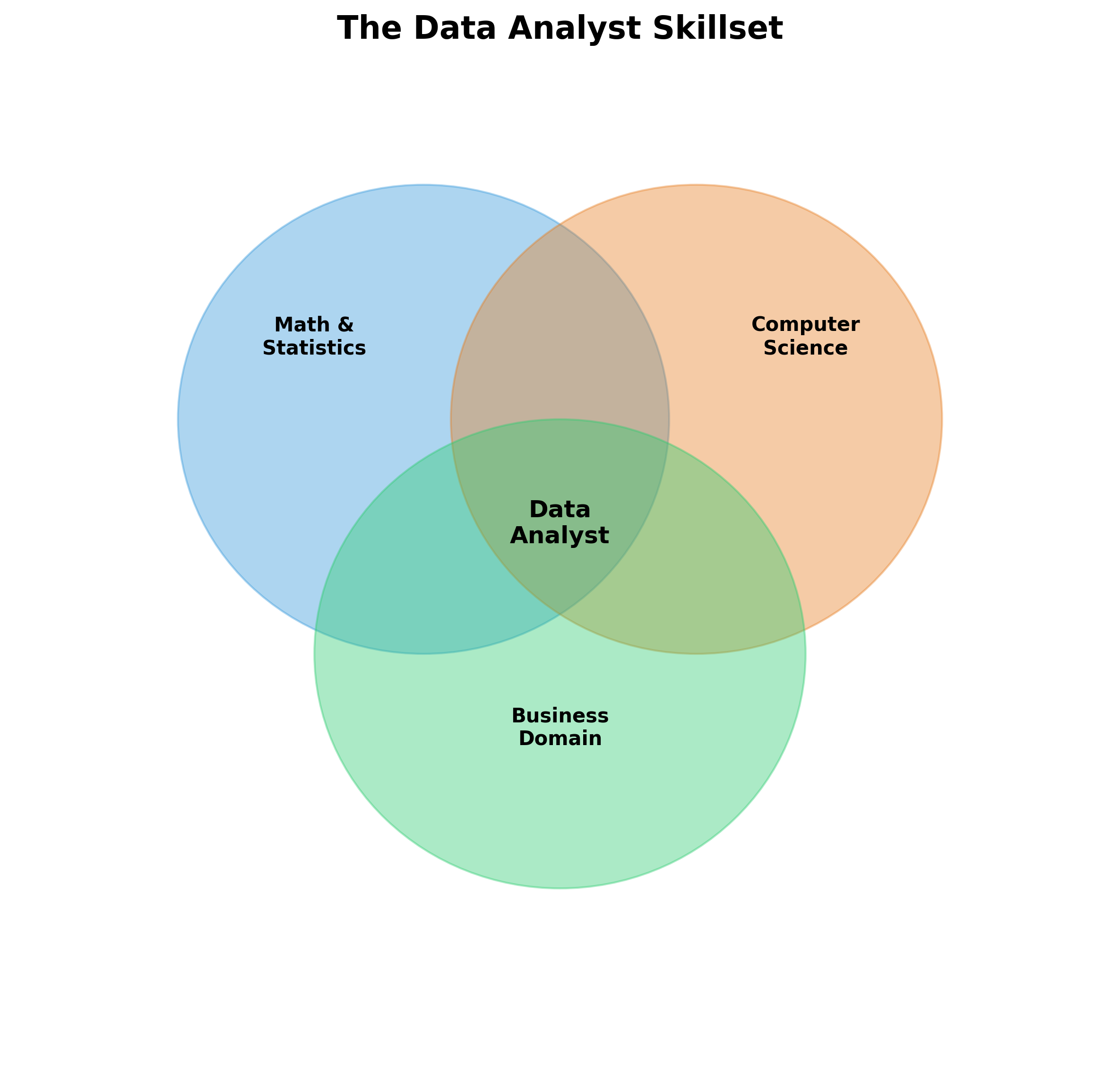
(A successful analyst combines Business Domain Knowledge, Data Processing skills, and Modeling Knowledge.)
Data-Driven Decision Making (DDD)
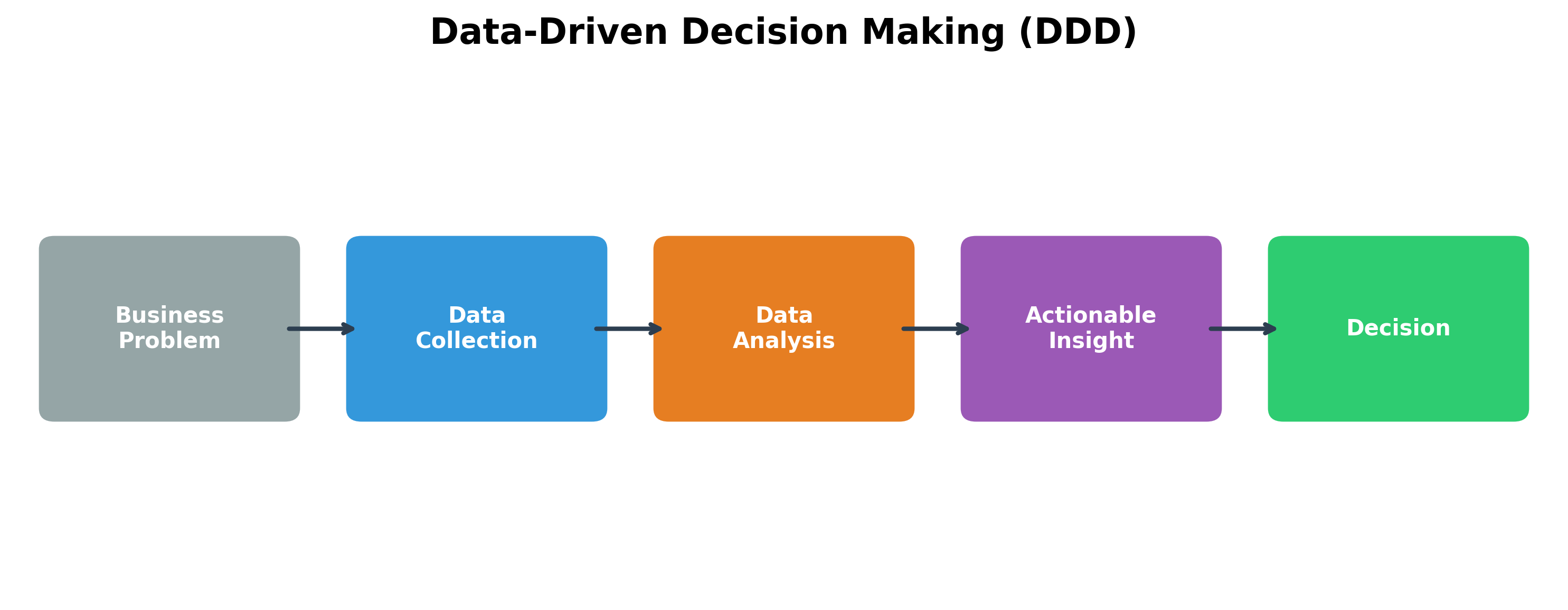
DDD is the practice of basing decisions on the analysis of data rather than purely on intuition. It's a foundational principle of modern business. This process involves:
- Data Engineering: Building pipelines to process large amounts of data.
- Data Science: Applying techniques to analyze the data.
- Automated DDD: Using the insights to drive automated decisions at a company level.
Types of Analytics
Analytics can be broken down into four main types, each answering a different question:
Descriptive Analytics: What has happened?
- This is the most common form of analytics, involving reports and summaries of historical data. It's like looking in the rear-view mirror.
Predictive Analytics: What could happen?
- This involves using statistical models and machine learning to forecast future outcomes. It's like looking out the front windshield.
Prescriptive Analytics: What should happen?
- This goes a step further, recommending actions to take to achieve a desired outcome. It's like a GPS guiding your vehicle.
Cognitive Analytics: How can we learn and adapt?
- This involves highly automated systems that get smarter over time, constantly learning from new data to tweak and improve solutions.
(As you move from Descriptive to Cognitive analytics, the value increases, but so does the difficulty.)