Analytics Maturity Model
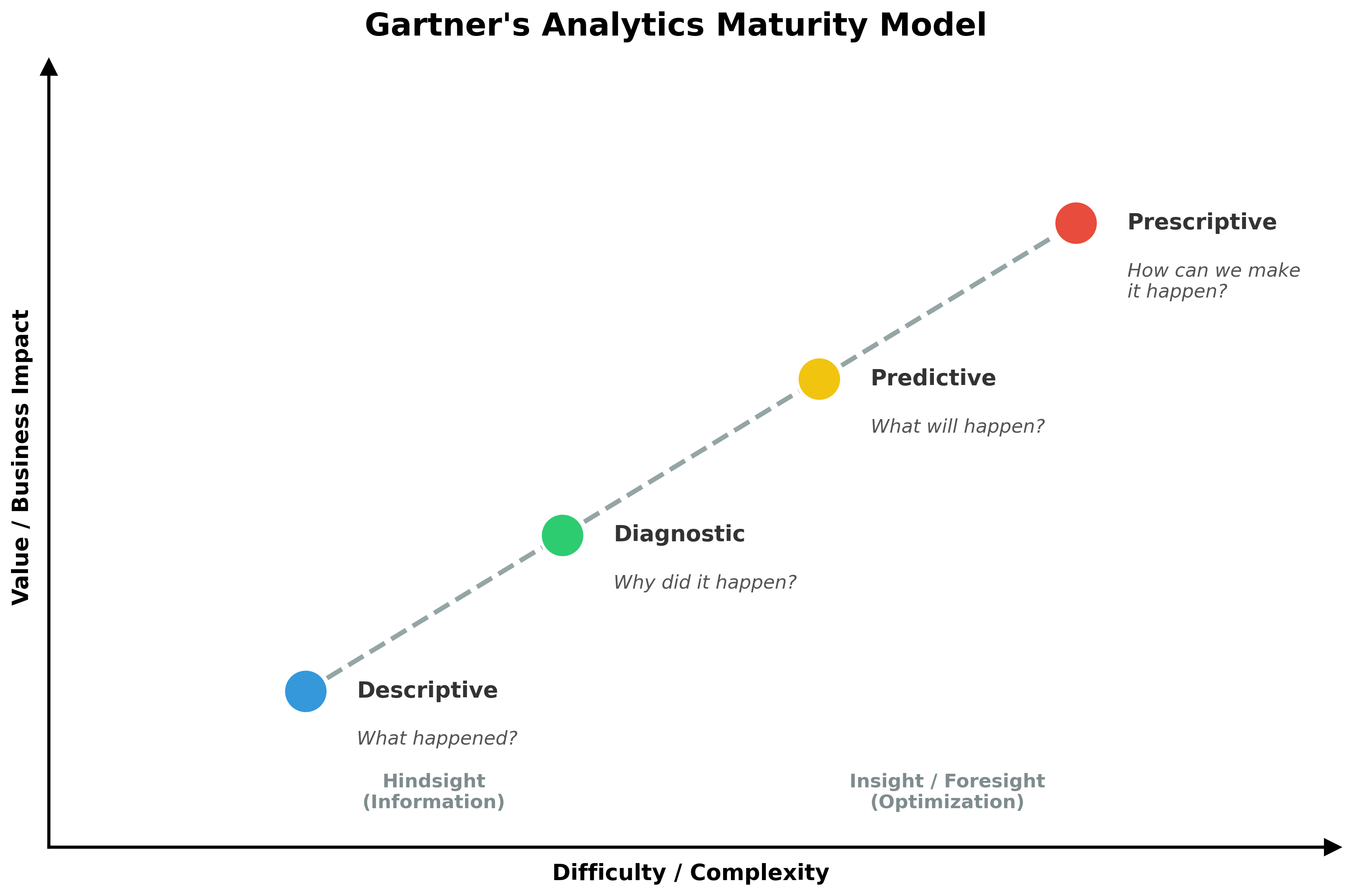
The journey companies take to analyze data for insights and decision-making can be broadly classified into the following stages:
Descriptive Analytics (What happened?): This is the most basic stage. It involves gathering and visualizing historical data to understand past events. It helps answer questions such as:
- What were our monthly sales figures over the last quarter or year?
- Which is our best-selling product?
- Who are our best customers?
Diagnostic Analytics (Why did it happen?): This stage goes deeper by identifying patterns and dependencies to explain why something occurred. It is used to answer questions such as:
- Why did sales drop in March?
- Why is our market share dropping?
- Why are students not engaging with the content?
Predictive Analytics (What will happen?): This stage uses machine learning techniques to forecast future outcomes. It helps to answer questions such as:
- What is our sales forecast for next year?
- Which customers are likely to default on a loan?
- Which customers are likely to buy our products?
Prescriptive Analytics (How can we make it happen?): This is the most advanced stage. It applies machine learning techniques to suggest specific actions to achieve a desired result. It helps to answer questions such as:
- How should we invest our money?
- What is the best route to improve sales?
Traditional Business Intelligence (BI) and reporting tools typically handle the first two phases: Descriptive and Diagnostic analytics. AI and Machine Learning techniques are used for Predictive and Prescriptive Analytics.
Gartner's Analytics Maturity Model
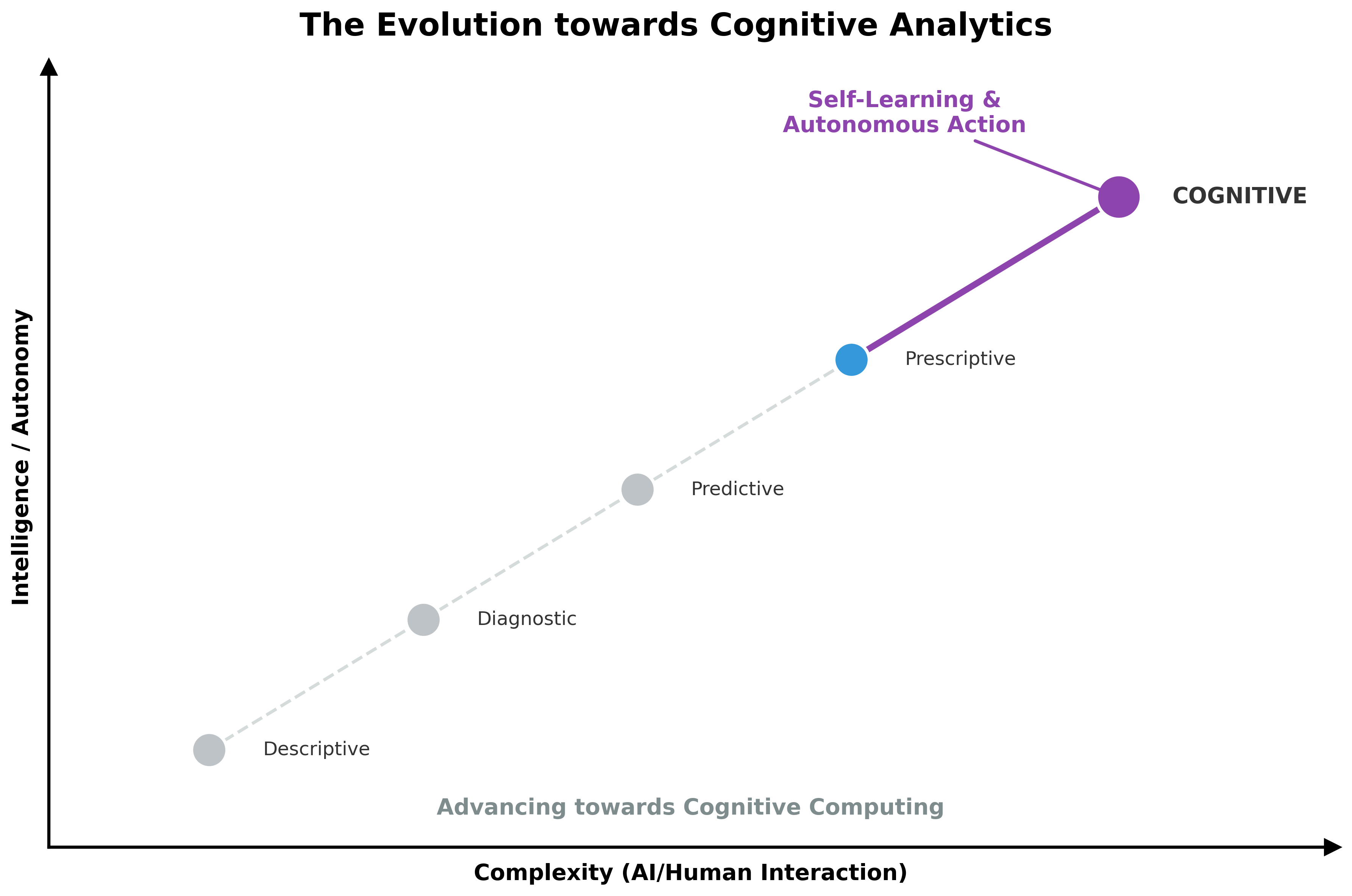
Moving towards Cognitive Space
Recipe for AI's Success
While data scientists have developed numerous algorithms and techniques for predictive and prescriptive analytics, the following ingredients are essential for a successful outcome:
- Large, High-Quality Datasets: The model is only as good as the data it's trained on.
- Appropriate ML Models: Selecting the right algorithm for the problem is crucial.
- Sufficient Computational Power: Training complex models requires significant processing power (e.g., GPUs).
Data Science Life Cycle

Machine Learning Use Cases
Here are some common use cases for machine learning across various industries:
Manufacturing
- Predictive maintenance or condition monitoring
- Warranty reserve estimation
- Demand forecasting
Financial Services
- Fraud detection
- Credit worthiness evaluation
- Customer segmentation
- Cross-selling and up-selling
Retail
- Predictive inventory planning
- Recommendation engines
- Upselling and cross-selling
- Customer ROI and lifetime value
Travel and Hospitality
- Analyzing consumer feedback and interactions on social media
- Customer complaint resolution
- Traffic pattern and congestion management
Healthcare
- Alerts and diagnostics from patient data (both streaming and at rest)
- Disease identification
- Proactive health management
Across all types of business
- Sentiment analysis
- Market segmentation and targeting
- Sales and marketing campaign